Blood Test for Fibromyalgia:
Understanding Fibromyalgia and the Search for Better Diagnosis
Fibromyalgia is a long-term neurological condition that causes widespread pain throughout the body. It affects the way the brain and nervous system process pain signals, leading to chronic discomfort, fatigue, sleep disturbances, and cognitive difficulties.
According to estimates, fibromyalgia affects approximately 2% to 4% of the population and is more common in women than in men. Despite its prevalence, diagnosing fibromyalgia remains challenging because its symptoms often overlap with those of several other medical conditions.
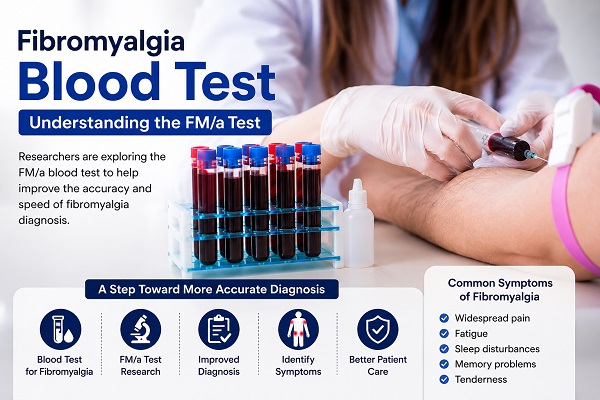
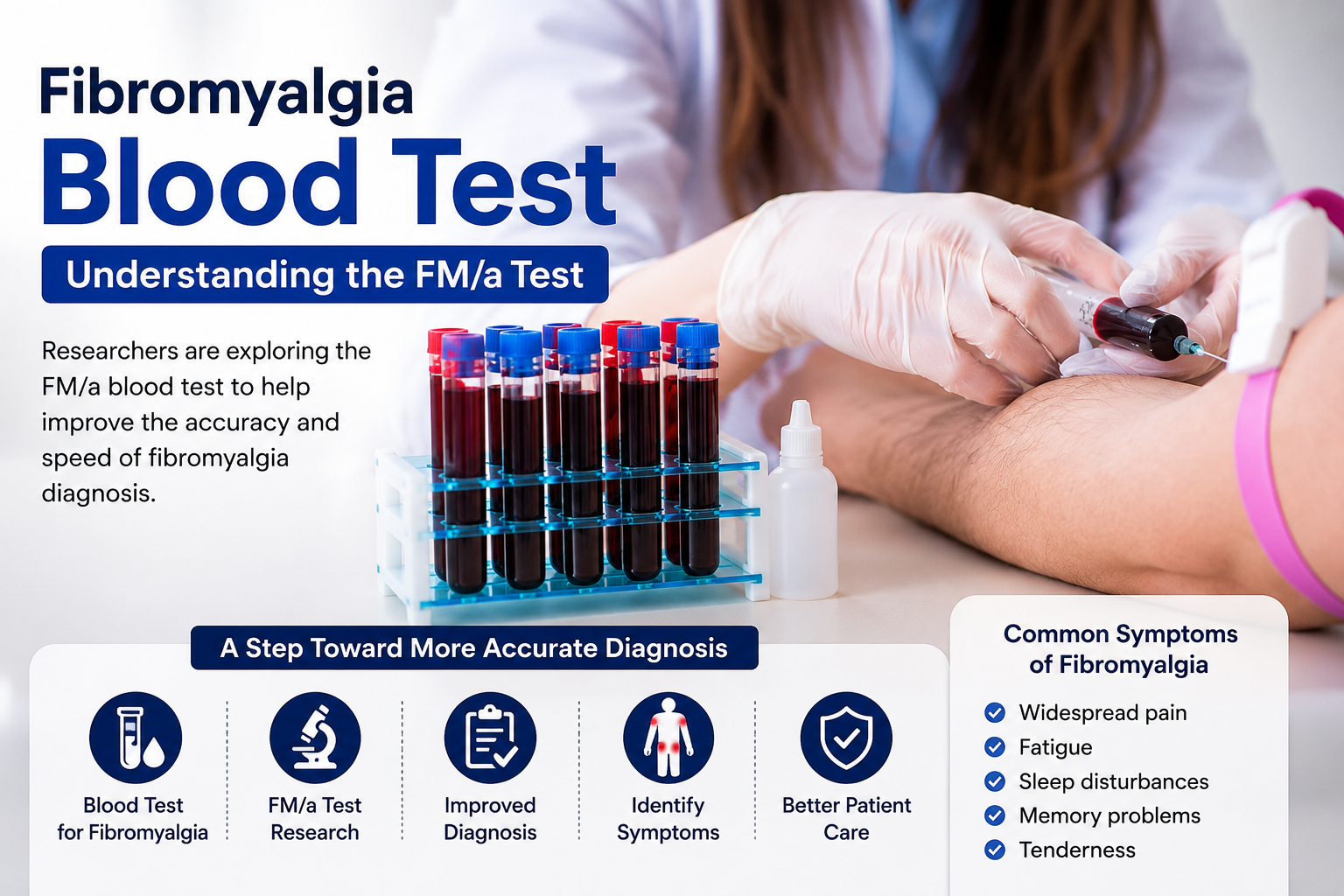
Researchers have been exploring new diagnostic methods, including a specialized blood test known as the FM/a test. While early findings are promising, the test is still relatively new and has not yet become a standard diagnostic tool.
Common Symptoms of Fibromyalgia
People living with fibromyalgia may experience a wide range of symptoms that vary in severity. The most frequently reported symptoms include:
Chronic Widespread Pain and Tenderness
Pain can affect muscles, joints, and soft tissues throughout the body. Many individuals also experience increased sensitivity to touch or pressure.
Persistent Fatigue
Even after a full night’s sleep, people with fibromyalgia often feel exhausted and lack energy throughout the day.
Sleep Disturbances
Difficulty falling asleep, staying asleep, or achieving restorative sleep is common among fibromyalgia patients.
Memory and Concentration Problems
Many individuals report cognitive challenges, often referred to as “fibro fog,” which can affect focus, memory, and mental clarity.
Why Fibromyalgia Is Difficult to Diagnose
Unlike many medical conditions, fibromyalgia cannot currently be confirmed through a single routine laboratory test or imaging study. Healthcare providers typically diagnose it by evaluating symptoms, reviewing medical history, and excluding other disorders with similar characteristics.
Because many diseases share symptoms such as pain, fatigue, and stiffness, diagnosis may take time and require multiple evaluations.
Medical Conditions That May Mimic Fibromyalgia Symptoms
Several disorders can produce symptoms similar to fibromyalgia. Healthcare professionals often investigate these conditions before confirming a diagnosis.
Hypothyroidism
An underactive thyroid gland can cause fatigue, muscle aches, joint pain, and mental sluggishness.
Polymyalgia Rheumatica
This inflammatory condition often leads to widespread muscle pain and stiffness, particularly in older adults.
Rheumatoid Arthritis
An autoimmune disease that causes inflammation in the joints and may result in pain, fatigue, and reduced mobility.
Lupus
A chronic autoimmune disorder that can affect multiple organs and produce symptoms such as joint pain, fatigue, and inflammation.
Blood Tests Commonly Used During Fibromyalgia Evaluation
Although there is no standard blood test that definitively diagnoses fibromyalgia, healthcare providers frequently order laboratory tests to rule out other conditions.
Complete Blood Count (CBC)
A CBC measures red blood cells, white blood cells, platelets, and hemoglobin levels to identify infections, anemia, or other blood-related abnormalities.
Thyroid Function Tests
These tests evaluate thyroid hormone levels and help detect hypothyroidism.
Antinuclear Antibody (ANA) Test
The ANA test helps identify autoimmune diseases such as lupus and other connective tissue disorders.
C-Reactive Protein (CRP) Test
CRP measures inflammation levels within the body and can help identify inflammatory conditions.
Erythrocyte Sedimentation Rate (ESR)
This test evaluates how quickly red blood cells settle in a test tube and may indicate the presence of inflammation.
If these and other evaluations do not reveal another explanation for the symptoms, healthcare providers may consider fibromyalgia as a potential diagnosis.
What Is the FM/a Blood Test for Fibromyalgia?
The FM/a test is a specialized blood test developed to help identify biological markers associated with fibromyalgia.
The test analyzes a blood sample by examining peripheral blood mononuclear cells (PBMCs) and plasma. Researchers focus on measuring cytokines, which are proteins involved in immune system signaling and inflammatory responses.
Some studies have found that individuals with fibromyalgia may have altered cytokine activity compared to people without the condition. These findings have led researchers to investigate whether cytokine patterns could serve as diagnostic indicators.
Current Research on the FM/a Fibromyalgia Test
Research into the FM/a test has produced encouraging results, but more large-scale clinical studies are needed before it can be widely adopted as a standard diagnostic tool.
Several factors currently limit its routine use:
- Not all healthcare providers are familiar with or utilize the test.
- Insurance coverage may vary or may not be available.
- Additional validation studies are required to confirm its accuracy and reliability across diverse patient populations.
For these reasons, most healthcare professionals continue to rely on established diagnostic criteria when evaluating fibromyalgia.
Can You Assess Fibromyalgia Symptoms at Home?
While self-diagnosis is not recommended, tracking symptoms can help you and your healthcare provider better understand your condition.
Maintain a Pain Journal
Consider recording:
- Areas of the body where pain occurs
- Severity and duration of symptoms
- Activities performed before symptoms began
- Frequency of pain episodes
- Whether symptoms have persisted for longer than three months
Monitor Tender Areas
Take note of regions that feel unusually sensitive to pressure or touch.
Track Sleep Quality
Keep a record of sleep patterns, including how rested you feel upon waking and throughout the day.
This information may help your healthcare provider conduct a more thorough evaluation.
How Fibromyalgia Is Diagnosed Today
Most healthcare professionals currently diagnose fibromyalgia using established clinical guidelines rather than laboratory confirmation.
Symptom Assessment
Doctors evaluate the type, duration, and severity of symptoms, including pain, fatigue, and cognitive difficulties.
Widespread Pain Evaluation
The distribution of pain throughout the body is assessed using tools such as the Widespread Pain Index (WPI).
Exclusion of Other Conditions
Blood tests, imaging studies, and additional examinations may be performed to rule out alternative diagnoses.
Review of Medical History
A detailed review of symptoms and medical history helps healthcare providers identify patterns consistent with fibromyalgia.
The Future of Fibromyalgia Blood Testing
The development of the FM/a test represents an important area of ongoing fibromyalgia research. Although it is not yet considered a universally accepted diagnostic standard, it may contribute valuable information in certain clinical situations.
As scientific understanding of fibromyalgia continues to improve, future diagnostic tools may offer faster and more accurate identification of the condition.
Patients interested in the FM/a test should discuss its availability, potential benefits, and limitations with their healthcare provider. In some cases, healthcare professionals may also provide information about research studies or clinical trials related to fibromyalgia diagnosis.
Final Thoughts
Fibromyalgia remains a complex condition that can be difficult to diagnose due to its broad range of symptoms and similarities to other disorders. While the FM/a blood test has shown promise in research settings, it is still being evaluated and is not yet a replacement for established diagnostic methods.
For now, healthcare providers continue to rely on symptom assessment, medical history, and the exclusion of other conditions to diagnose fibromyalgia. Ongoing research may eventually lead to more precise diagnostic tools, helping patients receive answers and treatment more quickly.